
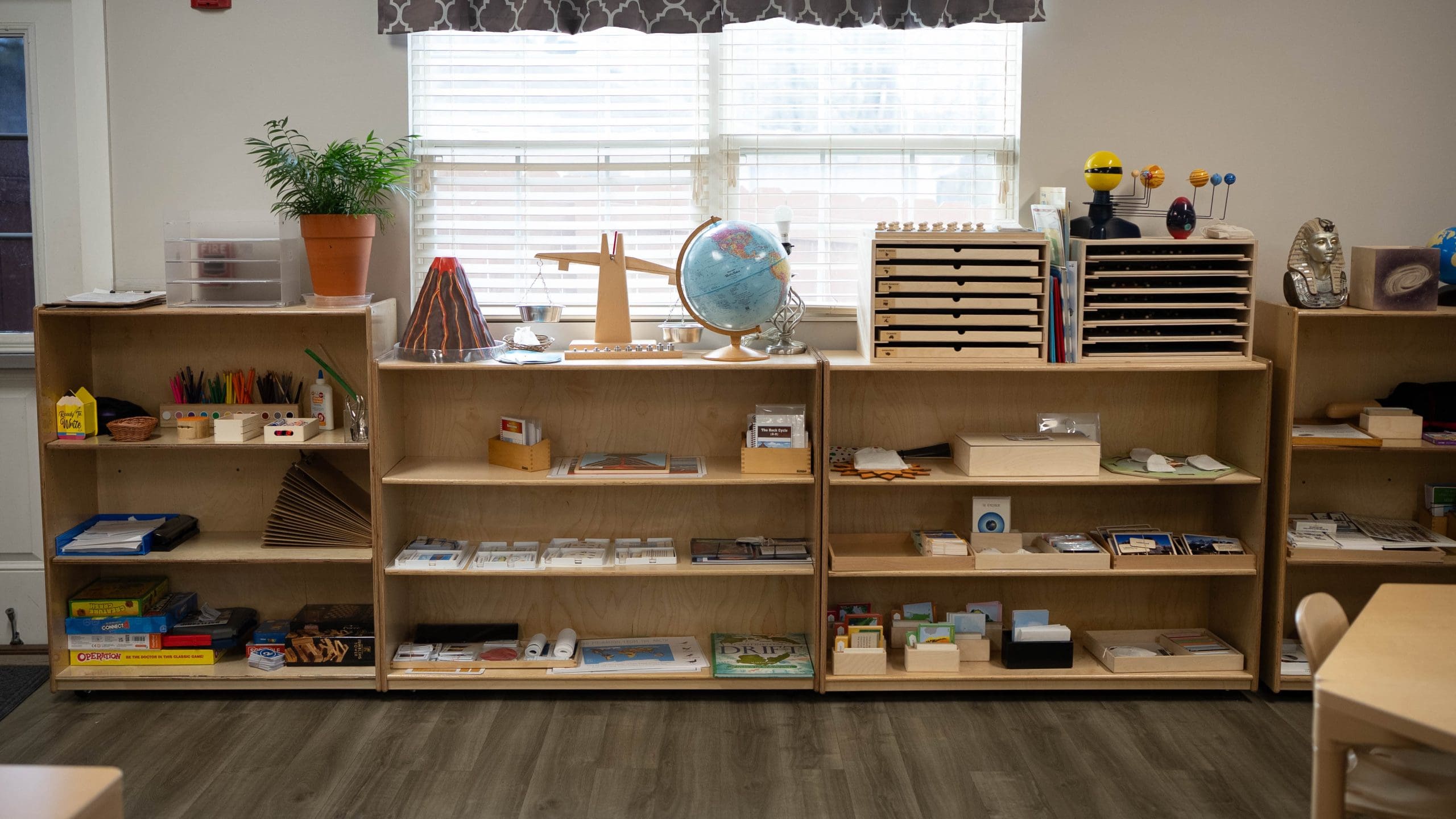
Montessori Materials
Montessori students often refer to their activities as “work,” which typically describes the specific material they’re using or the task they’re engaged in. These materials are intentionally designed to be self-correcting, allowing children to assess their progress and accuracy independently, without needing constant input from a teacher. Each material includes what’s called a “control of error,” meaning it will only function correctly if used properly—for example, puzzle pieces that only fit together in one specific way.
Dr. Montessori created these hands-on materials to help children grasp abstract concepts through concrete experiences. In the Early Childhood language curriculum, for instance, sandpaper letters allow children to trace each letter with their fingers, engaging their sense of touch. This tactile experience helps build muscle memory for letter shapes before they’re even able to write with a pencil. Similarly, in the math curriculum, children use bead materials to perform counting and operations. Subtraction becomes intuitive when they physically remove beads to see the result.