
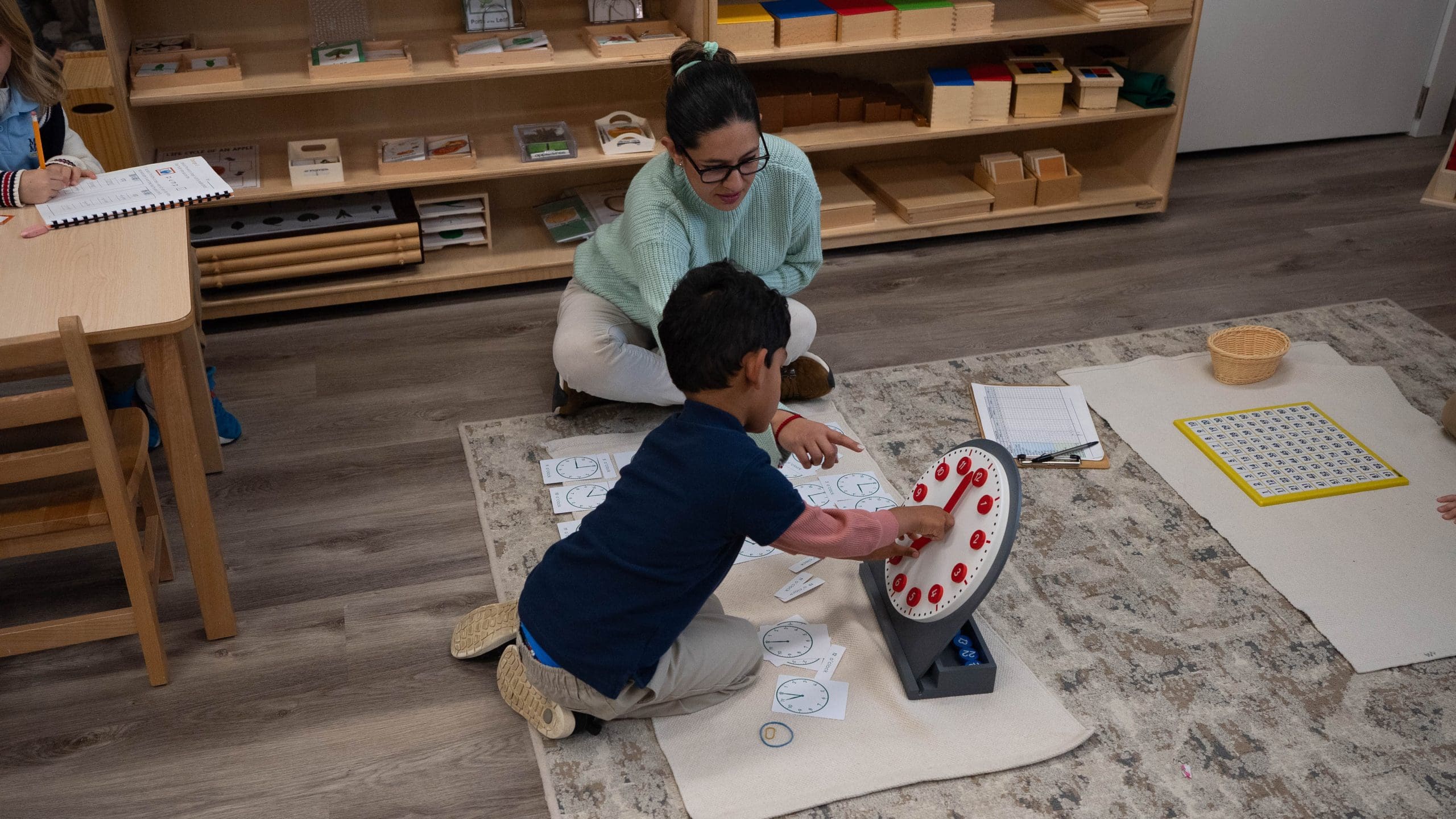
Role of the Teacher
In traditional classrooms, the teacher often stands at the front, delivering lessons to the entire group at once. In contrast, Montessori teachers take on a more dynamic and supportive role. Rather than leading from the front, they move throughout the classroom, observing each child closely to understand their interests and needs. They offer thoughtful guidance, encouragement, and personalized lessons that meet each student where they are. Instead of using a uniform teaching method, Montessori educators tailor learning experiences to support individual growth and connect new ideas to meaningful, real-life contexts. They also help children develop social skills and learn to collaborate effectively with others, acting more as coaches than directors.
In a Montessori classroom, the teacher’s main responsibility is to prepare and maintain a learning environment that encourages exploration, independence, and curiosity. They intentionally step back, allowing children to take ownership of their learning within clear, respectful boundaries. By designing the environment rather than controlling the children, Montessori teachers empower students to make choices and take initiative.
Ultimately, the Montessori teacher acts as a guide, mentor, and trusted companion—someone who supports each child’s journey, fosters independence, and nurtures their overall development.