
Primary
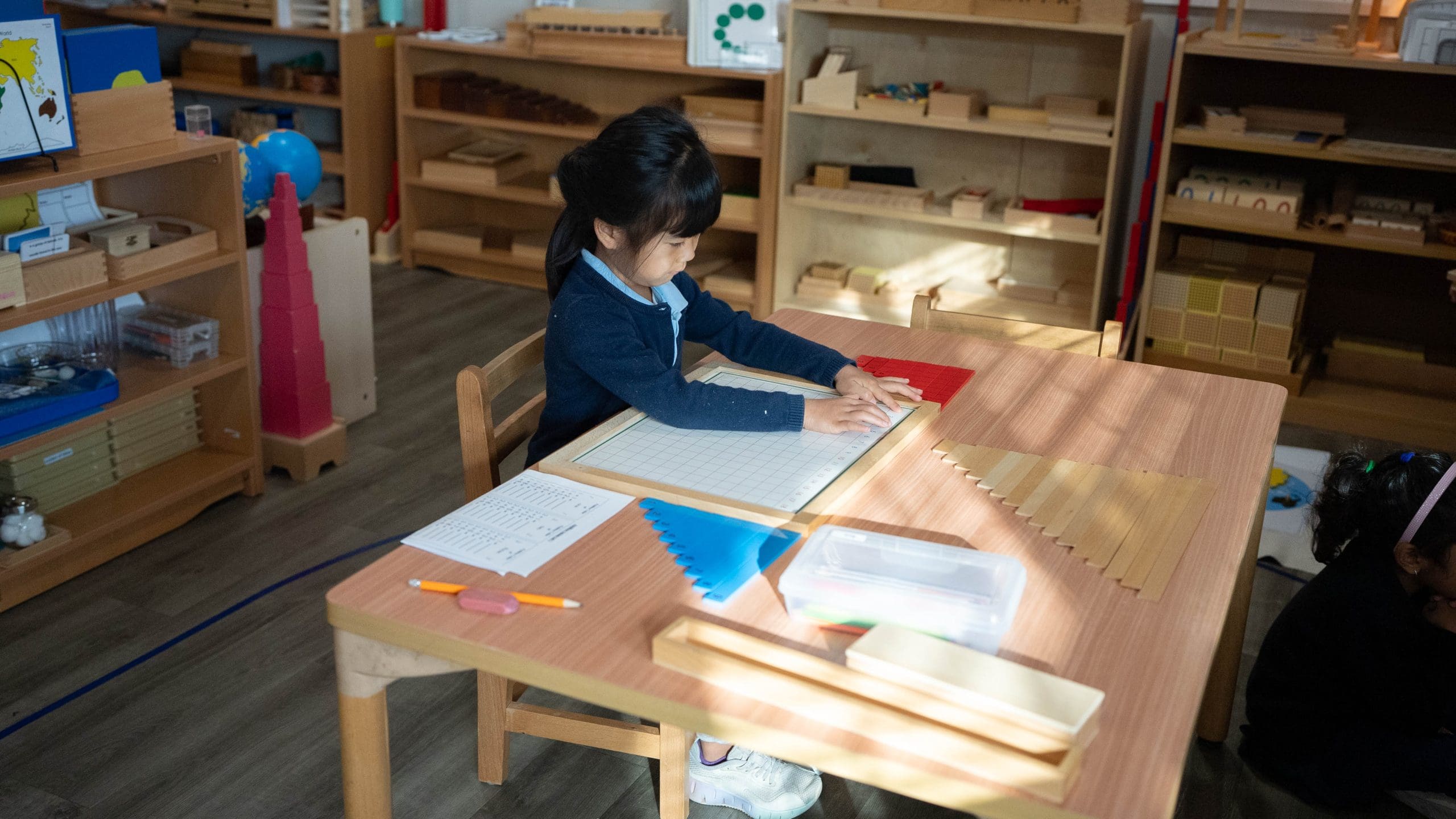
Primary Curriculum (3 years - 6 years)
At Milton Montessori School, our Primary classrooms serve children ages 3 to 6 in a mixed-age environment carefully designed to foster independence, curiosity, and a love for learning. Dr. Maria Montessori referred to this stage as a “sensitive period” for development—a time when children are naturally drawn to order, language, movement, and social relationships.
In this peaceful and thoughtfully prepared setting, children work across five core areas of the Montessori curriculum: Practical Life, Sensorial, Language, Mathematics, and Cultural.
Practical Life:The Practical Life area is often a child’s first connection to purposeful work. Designed to build independence, concentration, and coordination, this space includes activities in:
- Care of Self- Care of Others
- Care of the Environment
- Control of Movement
- Grace and Courtesy
Through these lessons, children gain confidence and refine both fine and gross motor skills, all while developing a sense of responsibility and pride in their work.
Sensorial:
In the Sensorial area, children learn to classify and make sense of the world through their senses. Materials are designed to isolate specific qualities—such as color, shape, texture, and sound—allowing for focused exploration. This area also introduces foundational concepts in geometry and lays the groundwork for logical thinking and pattern recognition.
Language:Language development is central to the Primary classroom. Children are immersed in a rich environment of spoken language, phonetic awareness, reading, and writing. Our guides offer individualized lessons and a wide variety of materials, allowing each child to progress at their own pace. Older students often model and support younger ones—fostering a collaborative and nurturing community of learners.
Mathematics:Mathematics in the Montessori classroom begins with concrete, hands-on materials that allow children to internalize concepts like quantity, place value, and the four operations: addition, subtraction, multiplication, and division. As they build confidence and understanding, children naturally transition toward more abstract thinking and problem-solving.
Cultural:The Cultural area introduces children to geography, science, botany, zoology, and world cultures—broadening their understanding of the world and their place in it. These lessons spark curiosity and often extend into our outdoor classroom, where children explore nature, tend to the garden, and take part in nature walks that deepen their connection to the environment. Our experienced Montessori guides create a calm, beautiful, and purposeful environment that honors each child’s unique journey. In the Primary classroom, learning is joyful, meaningful, and deeply rooted in exploration.
Daily Schedule:
| 8:30 AM – 11:30 AM: | Morning work cycle |
| 11:30 AM – 12:00 PM: | Playground time for younger children |
| 12:00 PM: | Half-day children dismissal |
| 12:00 PM – 12:30 PM: | Lunchtime |
| 12:30 PM – 1:00 PM: | Afternooners/Kindergartners’ playground time |
| 12:45 PM – 2:30 PM: | Rest time for nappers |
| 1:00 PM – 2:45 PM: | Afternoon work cycle for Afternooners/ Kindergartners. |
| 3:00 PM: | School day children dismissal |
| 3:00 PM – 6:00 PM: | Aftercare for full-day children |